12 Steps and Unmanageability
Unmanageability is a key idea in the 12 step approach. It is there in the very first step of Alcoholics Anonymous, “We admitted we were powerless over alcohol — that our lives had become unmanageable.“
The 12 Step solution is to look to a higher power to support us with managing our lives better. This higher power is the God of your understanding, but it could also be the group (together we are stronger) or the program itself.
Unmanageability is compounded by a feeling of alienation. Joining a 12 step group means no longer facing your issues alone. It provides a way out of addiction and unmanageability that has already worked for millions of people.
Mindfulness and Unmanageability
Despite the success of the 12 Steps, it is not for everyone. Mindfulness can be used as an alternative approach or a complementary approach (i.e. used alongside the 12 steps).
The Thai Monk Luang Por Teean had a nice analogy that can better help us grasp the mindfulness approach to unmanageability. He describes the mind as being like an attic on top of a house that has become overrun with rats. We need a cat to go up there to get things back in order. He likens our awareness to this. The problem is that those who fall into addiction have only a small kitten which is no match for the rats. The goal then of mindfulness is develop a powerful cat so it can regain control.
Mindfulness tries to address the underlying causes of unmanageability which it sees are delusion, lack of mental clarity, and unskillful behaviour. It uses the Buddhist Eight Fold Path to address this (although it is not necessary to become a Buddhist to benefit from the approach).
For mindfulness to work, we need to start changing our behaviour. So, we avoid intoxicants because they rob us of mental clarity. We also become willing to begin facing things like difficult emotions rather than running away from them. We then use meditation to develop mental clarity. This makes it possible to overcome delusion as we mindfully face the thoughts and underlying assumptions that contribute to it.
The Dry Drunk – Unmanageability in Recovery
Quitting our addiction will almost always lead to improvement in our life. But unless we make further efforts, our lives can continue to be unmanageable. This is commonly referred to as being a “dry drunk”. This will usually mean that we are at high risk of relapse, but even if we manage to remain sober, it can be an unsatisfying life for us and those around us. This is why continued engagement with something like the 12 steps or mindfulness is vital. There are also other options like SMART Recovery, CBT, or Dharma Recovery.
We drank because life was too hard, but now that things are easier the need to escape disappears. Not because life has necessarily become easier, but because we are so much better at handling it. Instead of being somebody who can’t drink or take recreational drugs, we become somebody who doesn’t need to.
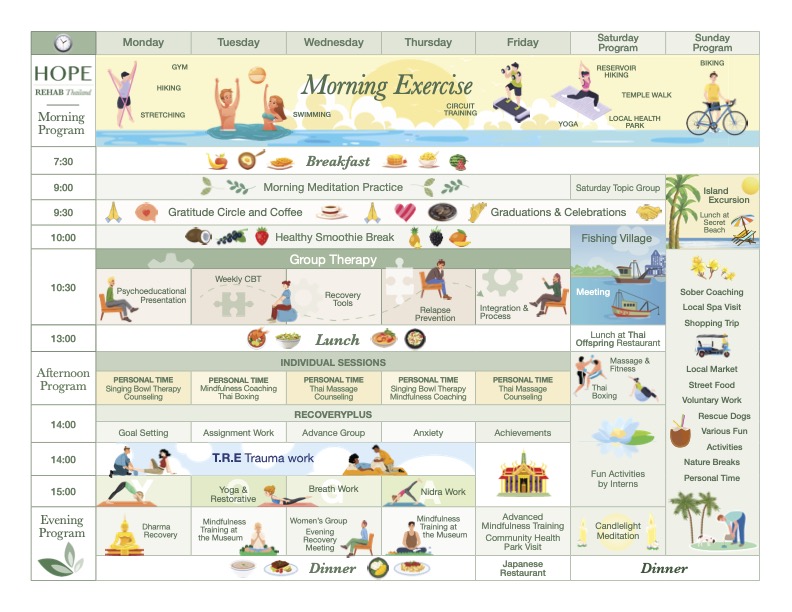
While at Hope life becomes manageable and starts with following our busy timetable and program structure.