

Completing Treatment at Hope Rehab
This wasn’t just a three-month stay — it was a journey of real transformation. I laughed, I cried, I healed, and I grew every single day. The programme here is exceptional, combining structure, compassion, and lived experience in a way that truly works.
Ryan W.
Rehab is a Golden opportunity
Getting the chance to go to Hope Rehab in Thailand is an amazing opportunity. How many addicts would love this life saving opportunity but will never get the chance? That said, entering treatment can still be a daunting prospect. Rehab is a huge investment not only financially, but also emotionally. It is a step into the unknown and potentially a life-changing decision.
How long is treatment?
The short answer is the longer the better. ‘We did not become addicted in one day’ so treatment can take time, more than a few weeks. However, it’s wise to bite off manageable chunks at a time. Some clients book a month and then extend their stay. Others commit to a full 3 months. Obviously, this depends on time and resources available.
Recommendation
It is widely recommended to take a minimum of 90 days to ensure the best outcome. However, the ideal duration depends on individual circumstances, severity of addiction and associated issues. Three months is not always essential, if a client is motivated to continue therapy when they return home.
My time at hope was nothing short of a life changing experience, I came in a broken man both physically and mentally & within 2 months I feel back to the person I want to be.
S D
Completing Rehab Is Easier at Hope
Hope Rehab has the highest retention rates you can find anywhere. This is because we select our clients very carefully. Being in Thailand also helps. Treatment is not a quick fix like addiction itself. Completing a task or a goal is a sign of maturity and part of self-development. The therapeutic team will help guide clients as far as treatment duration and onward referrals.
Addiction and recovery is a ‘heroes journey’ of sorts. It is important to finish what you start. Many addicts have issues honoring commitments, especially when it gets tough without drink and drugs. The Hope program can be demanding, mentally, emotionally, physically and requires tolerance to others living in a therapeutic community. For most clients it is fun and stimulating sharing their journey with others. Many meaningful and lasting relationships are forged at Hope. Mental health recovery also requires time in a therapeutic setting away from the stresses of the western world.
Being Ready
Hope’s assessment criteria include establishing genuine motivation. The reason for coming needs to be more than just family pressure, employment threats, or an attempt to escape some kind of trouble. Our clients must want to get well and be prepared to do what it takes to make this happen. Of course, family or employer support is an added benefit for anyone seeking help.
Why Thailand
Never do rehab close to home! Being in Thailand means it’s harder to leave impulsively and is generally safer. So long as a client is motivated enough, Thailand will inspire them to stay the course.
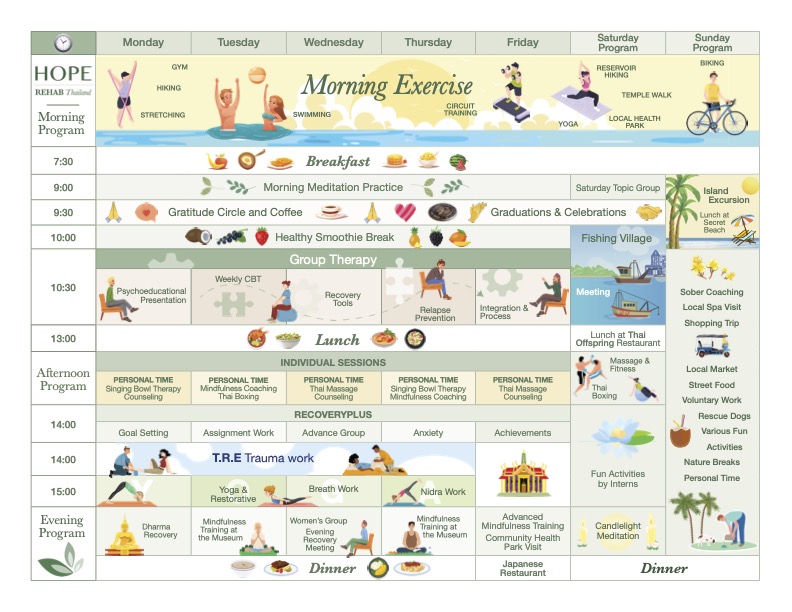
Hope provides sober-coaching on weekends outside of our treatment facility. Friday evenings we go to the health park to join in community exercise and then eat in a local restaurant. Saturday, we visit a nearby fishing village, attend a recovery meeting and have lunch. Sunday excursions include, Sichang Island, the beach, temple visits, shopping and much more.
Graduation Ceremonies
All clients receive a specially minted Hope graduation coin and certificate on completion of treatment. This ceremony at hope encouragers new clients to do the same and complete treatment.
Does Anyone Leave Treatment Before Completing?
The short answer is very rarely does this happen. We never let anybody just walk out of treatment. On the other hand, we cannot force an adult to say against their will. What do we do if a client tries to leave treatment prematurely?
- Immediate counselling session.
- Involve all the Hope team when possible.
- Involve peers and the community,
- Inform family and loved ones.
- One day at a time approach .
- Take time out.
- Sleep on it before final decision
- Remember why you came to treatment.
- Challenge any denial.
- Regular check-ins through the day.
- Remotivate process.
- Address any complaints.
Treatment Milestones and Adjustments
First the initial arrival and admissions process can feel very formal and official agreeing to the rules at Hope and giving up so called freedom. Then the initial acceptance of being in treatment sinks in. After about a week and physical withdrawal subsides, a false sense that treatment is no longer required can occur. At Hope, we understand that detox is just the beginning.
Next the 30-day point – As therapy begins addressing deeper issues, the emotional discomfort of that work can feel overwhelming. Leaving can become a way to escape uncomfortable feelings. Weekends can also be a trigger point, believing it’s time to have fun.
Why would someone want to leave prematurely?
- Treatment resistance.
- Triggers or cravings.
- Feeling uncomfortable.
- Pride gets in the way of getting help.
- Believing they are ready before they are.
- Quick fix approach.
- Lack of commitment.
- Frustration with pace of change or therapy.
- Home sick (missing family or friends).
- Underlying conditions like ADHD.
- Overconfidence.
- Rehab is too hard.
- Impatience (catch up quick syndrome).
- Avoiding challenges and struggles.
- Wants to run and use or have fun.
- Reality of getting clean and sober is tougher than expected.
- Temptations outside of treatment.
- Feeling too good too soon.
- Ego and arrogance.
- Compulsive behaviour.
- Feeling cured.
- Do it my way syndrome.
Breakthrough Moments
We don’t always see moments of wanting to leave as total setbacks. We see them as opportunities to build resilience, communicate needs, deepen clinical support, and strengthen recovery foundations.
Many of the Hope team are recovering addicts who have been through treatment themselves. They know from personal experience what’s true or false. If a client blames Hope we can also make some simple changes such as:
- Move room.
- Change therapist.
- Alter treatment plan.
- Managing relationships within the community.
- Stop focusing on what they find difficult.
- Advise them to practice acceptance (where appropriate).
- Limit external contact (e.g. if phone calls are becoming too distracting).
- Discourage financial enabling to leave.
Preparing for Treatment Mentally and Physically
Treatment, recovery and learning how to live and cope without the use of addictions and substances takes commitment and preparation. It is best to get organized for this, financially, relationships, work etc. Bring a supply of medication and clothing.
“Come in on a crisis – leave in a crisis” is another rule. If someone calls our admissions team and demands immediate access and attention due to a personal crisis they could walk out once the crisis is over. So, we advise against this. Make sure affairs are in order before embarking on this life changing journey to Thailand.
Rules and boundaries
Rules at Hope are fair and reasonable. During admission all our rules are explained and agreed to by clients. The rules are to provide a therapeutic and safe environment so all our clients can heal and achieve their goals.
Taking Hostages
We use the term ‘taking hostages’ when an unwilling client tries to influence others negatively and encourage others to break our rules. Hope must remain a safe place for substance addicts to recover. A drug free environment is all important for everyone at Hope. If a client should break our basic rules or show signs, they are not taking the program seriously we will challenge them immediately. One bad apple can affect our whole community, so we are very careful about this.
Loved Ones
Some family members can be ‘enablers’ and do not know how to say no. Especially true for younger clients who can be used to manipulating family. At Hope this is not tolerated. Families are encouraged not to undermine the counsellors at Hope, and we all work together for the best treatment outcome.
Next Of Kin (emergency contact)
All clients must provide an emergency contact for practical reasons. With the client’s consent, we keep families informed throughout treatment while respecting therapeutic confidentiality.
Discharge and Return When Ready
We always end the treatment episode on a positive note if possible. We also allow some clients to return when they are ready. But, although some may say they will return when they are ready, this can be risky as addiction is a life-threatening condition. Unfortunately, some clients don’t get the chance to return.
Risks of leaving treatment early unsupervised
- Risk of overdose.
- Arrest.
- Becoming a victim of crime.
- Psychological damage (e.g. trigger a negative downward spiral).
By Mutual Agreement
If a client is unsettled, unhappy, disruptive or repeatedly contravenes the rules at Hope, or we simply cannot help them, then we will agree an early discharge. However, this will be done responsibly in that they must return to their country of origin to ensure they do not get into trouble in Thailand and damage Hope’s reputation. No refund or cash of any kind will be given to them until they are safely back home.
If you have any questions about completing treatment at Hope, or other topics, please contact us for more information.

How Will I Sleep Without Alcohol?
How Will I Sleep Without Alcohol? The sad irony is that alcohol is a common cause of insomnia. I Need Alcohol to Sleep The fear

Hope Was All I Had Left
Hope Was All I Had Left The impossible started to feel possible. by Kirsty Arriving at Hope Hope. The first word I read when searching

Completing Treatment at Hope Rehab
Completing Treatment at Hope Rehab This wasn’t just a three-month stay — it was a journey of real transformation. I laughed, I cried, I healed,

Why We Discourage Steroid Use at Rehab
Why We Discourage Steroid Use at Rehab Real Strength Isn’t Developed Quickly Ending an addiction requires strength. We need to be tough to face the

Beyond Dry January -Would Rehab be a Better Choice for the New Year?
Is Dry January enough? For those with serious alcohol problems, rehab may be a better choice. Understand the risks of withdrawal, the role of denial, and why professional treatment could be more effective than a month-long break.

A Sober Christmas Can Be About Joy Not Dread
A Sober Christmas Can Be About Joy Not Dread Christmas is Hard to Ignore Christmas is a big deal. Two billion people in up to